About Ease in Motion
Learn more about our model— and who's behind it.
The Ease in Motion Model
Aging Well Means Moving Smarter
The workouts designed for those in their 20’s, 30’s, and even 40’s aren't built for what your body needs now. Younger bodies recover fast and can handle high-impact, high-repetition training with little consequence — but after mid-life, the priorities shift: joint health, balance, bone density, and nervous system recovery matter more than raw output.
A routine still centered on just pushing hard and burning calories misses what matters most to us as we age: staying active and independent, continuing to do the things we love, and feeling good in our bodies.
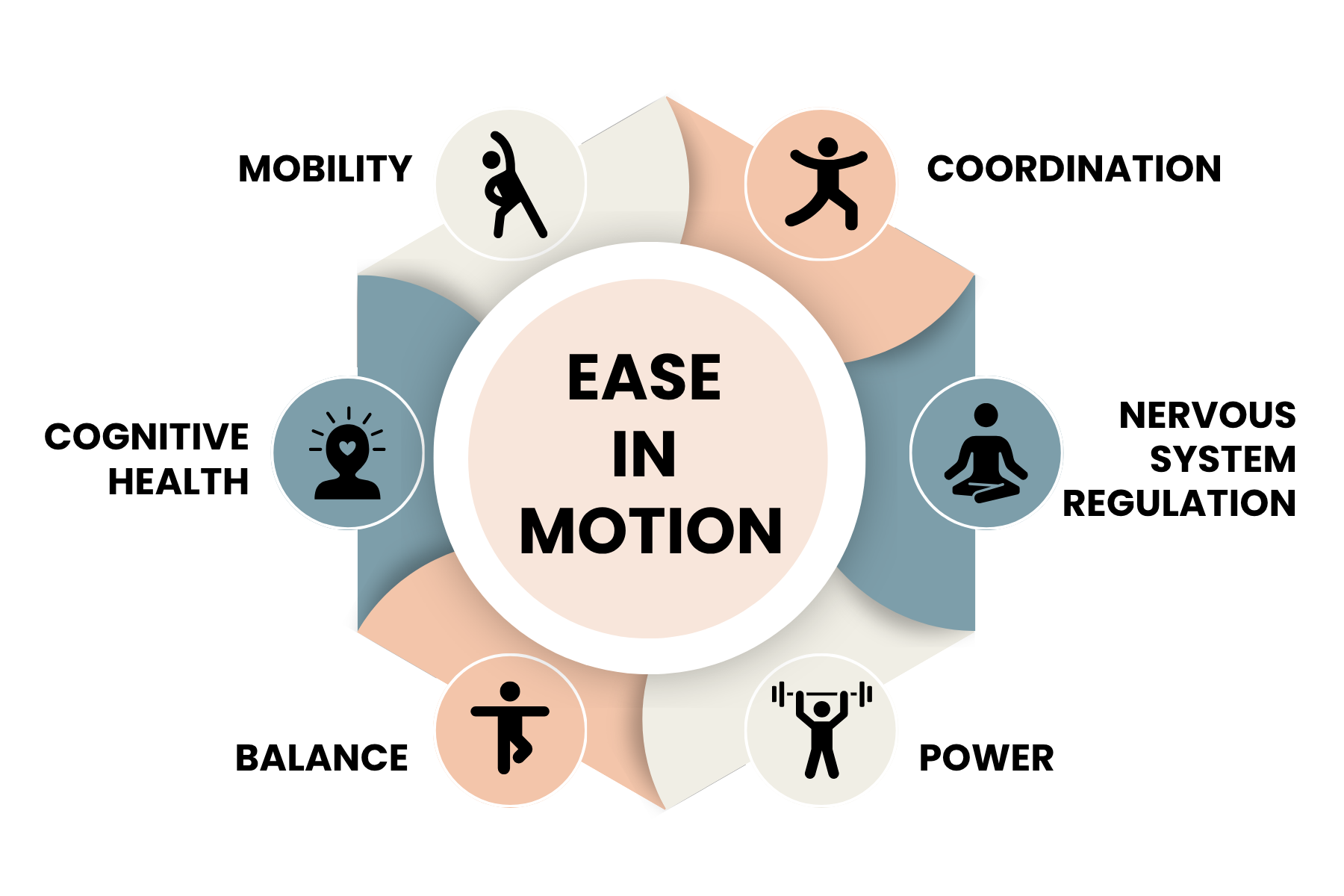
This isn't about doing less. It's about moving smarter, with less emphasis on how exercise makes you look, and more attention to how it makes you feel. That's the philosophy behind the Ease in Motion Model — six components of active longevity, each one addressing a specific piece of what keeps you strong, steady, and independent for years to come.
Your Body Can Change at Any Age
It's easy to assume that after a certain age, what you have is what you get — and that you’ll continue to lose function no matter what. That's not how the body works. The Ease in Motion Model is based on six components of active longevity that you have direct, immediate control over. Mobility, coordination, nervous system regulation, power, balance, and cognitive health— all of it remains trainable, because the body is designed to adapt to what you ask of it, for as long as you're asking.
There's another piece to this: reserve capacity. Think of it as your body's buffer — the extra strength and stamina you're not using day-to-day, but that you can draw on when life asks more of you. A surgery, an illness, a bad fall, a busy season that leaves no time to rest — reserve capacity is what determines how well you bounce back. The more of it you build now, the more protected you are later. It just requires the right approach.
Active Longevity
The Yoga Sutras of Patanjali is one of the foundational texts of yoga philosophy, written thousands of years ago. It opens with a simple but powerful word: atha — "now." Now is when the practice begins.
That same principle sits at the heart of active longevity: the future you want isn't built later, it's built in the choices you make today. Whether you've moved into the second half of life and are thinking ahead to the body you’d like to age into, or you've already started noticing age-related changes that are limiting what you can do, the moment to begin is the same: now.
Active longevity means using movement to maximize your healthspan– the years you live in good health, mobility, and independence. Healthspan isn't something that happens to you; it's something you actively build. At Ease in Motion, every group class and private session is designed with a purpose: to help you foster the physical and mental resilience and reserve that will carry you into the future you want, starting now.
Our Six Components for Active Longevity
-
You know the feeling — stiffness that lingers longer than it used to, a body that feels less like your own and more like something you have to manage. Mobility is what changes that. It's one of the strongest predictors of how independent, active, and capable you'll feel for years to come.
Mobility is trainable at any age. Your joints actually stay healthier through movement! And every bit of mobility work you do builds a foundation: more strength, better balance, more confidence in your body, and more freedom in your daily life.
-
Maybe it's reaching for something and misjudging the distance, or feeling a beat behind your own body — movements that used to be automatic now take extra thought and concentration. Coordination is what changes that. It's the invisible thread that connects your brain and body, so that movements feel smooth instead of effortful.
Coordination is trainable at any age. It's neural pathways that strengthen with practice, meaning every drill, every balance challenge, and every multi-step movement pattern you work through actually rewires how your brain and body communicate. And that rewiring shows up everywhere: in your reaction time, your confidence in your body, your ability to catch yourself before a fall becomes one.
-
Nervous system dysregulation can show up as trouble winding down at night, a body that feels tense even at rest, or a sense of being "on" long after the stressful moment has passed. Nervous system regulation is what changes that. It's your body's ability to shift smoothly between states — alert and calm, effort and recovery — instead of getting stuck in one gear.
This isn't just relevant to how you feel — it's the groundwork for everything else. A dysregulated nervous system makes it harder to build strength, harder to improve balance, and more difficult for the body to recover from training at all. Regulation isn't a soft add-on; it's what allows the rest of the work to actually stick. And like every other piece of the Ease in Motion model, it's trainable at any age.
-
Perhaps getting up from a low chair or the floor takes a beat longer than it used to, or quick movements feel a little less automatic. Power is what changes that. It's different from strength alone — it’s strength that you can produce quickly, and it's what lets you move with confidence in the moments that call for it.
Power is also one of the first things to decline with age if it isn't specifically trained — even in people who stay strong. That's because slow, steady strength work doesn't automatically translate to speed. The good news: power is trainable at any age, and even small amounts of targeted work make a real difference in how quick and responsive your body feels. That’s why Ease in Motion focuses not only on strength, but strength and speed together.
-
We all know what a lack of balance feels like – trusting your footing a bit less, shortening your strides to avoid falling, looking down at your feet instead of out at the world. Balance is the quiet coordination of your vestibular system, your senses, and the sensors in your joints and feet — all working together so you can stand, turn, and move without a second thought. Good balance isn't just about staying upright; it's what lets you move through the world with ease.
Balance is also highly specific — it doesn't improve just by getting stronger or more active in general. It has to be trained directly, through movement that challenges your stability in real ways. The good news: balance responds quickly to the right kind of practice, at any age, and even small improvements translate to a noticeable sense of steadiness in daily life.
-
There’s no question that improving and maintaining your cognitive health is crucial as you age. Movement and thinking aren't separate systems — they share the same neural pathways, which means the way you move actually shapes how sharp, focused, and quick your mind feels. A body that moves with coordination, balance, and intention is training the brain right alongside it.
This connection works both ways: cognitive engagement makes movement better, and movement makes cognitive function better. That's why the most effective training doesn't separate the two — it challenges your brain and body at the same time, through movement that requires focus, quick decisions, and adaptability, not just repetition.
Yoga Meets Function
When you think of yoga, you may picture a room full of super flexible 20-somethings doing headstands. That’s not what we do here. At Ease in Motion, we’ve created yoga-based classes that are integrated with functional fitness and modern longevity research. Yoga is practiced for what each movement builds and how it directly relates to your daily life. Every component of the Ease in Motion Model — mobility, balance, coordination, power, nervous system regulation, cognitive health — is trained through yoga, but always in service of function.
Balance postures translate to real steadiness on uneven ground. Breath work translates to a nervous system that recovers faster after a stressful day. Mobility work translates to doing your favorite activity, hoisting your bags into the overhead bin while traveling, or getting up off the floor— without a second thought. Multi-component work translates to a brain that continues to process input quickly and accurately. At Ease in Motion, our work always comes back to one thing: helping you move toward active longevity.
Where it Started: Education
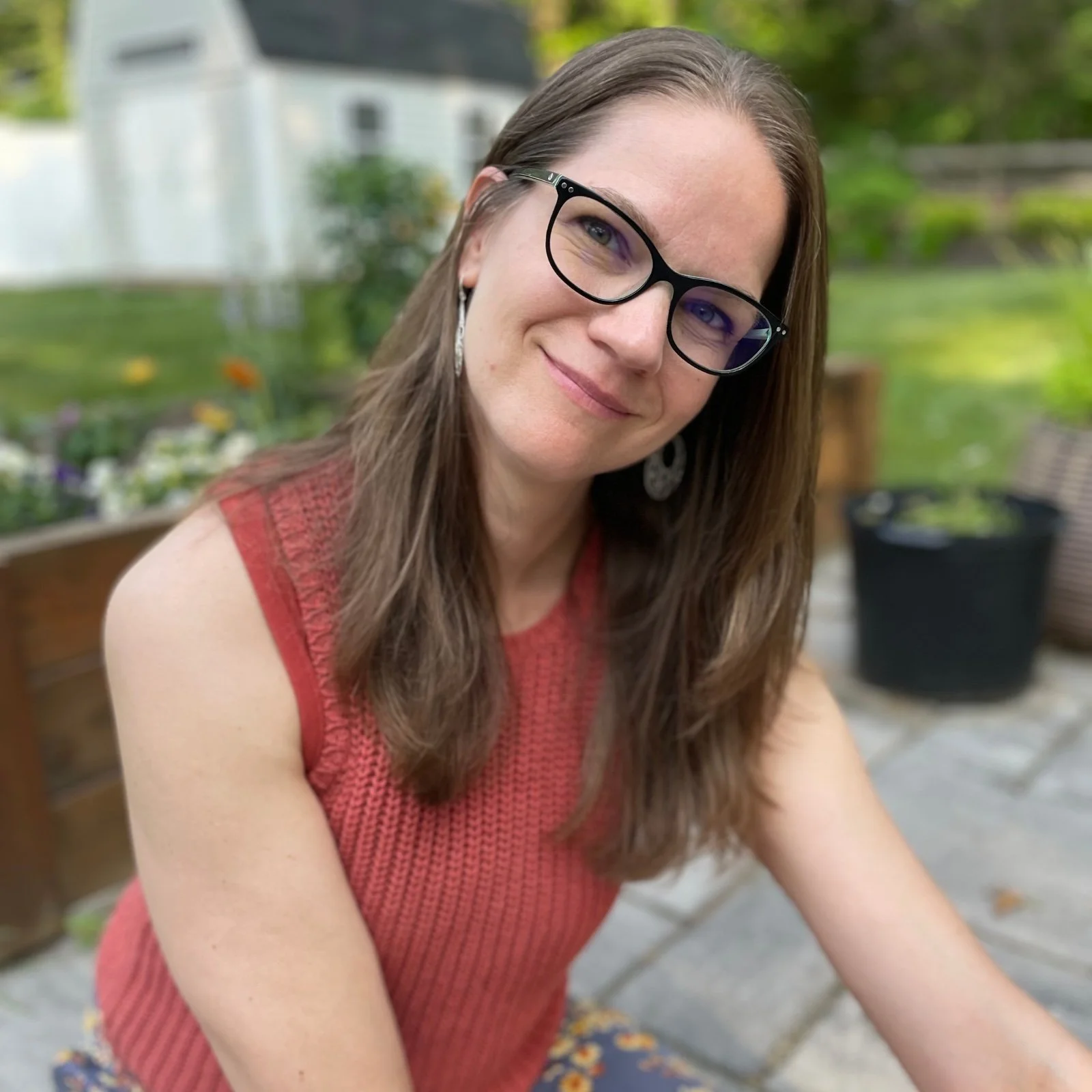
I love helping people live their best lives. That passion started in literacy education — 20 years teaching, leading, and consulting for programs serving dyslexic students. My goal was never just to teach kids what they needed for school; it was to open up the world for them. I worked from research-supported practices throughout, earning a Master's in Education and a Certificate of Advanced Studies in Language and Literacy along the way.
Kendra’s Story
The Injury that Changed Everything
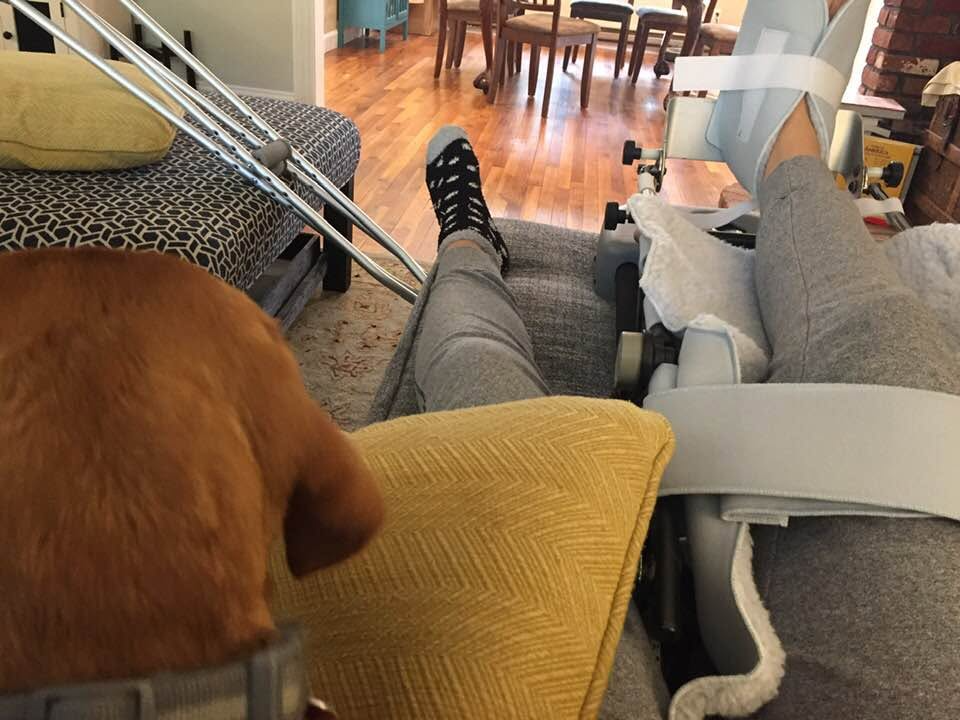
During those years, movement kept me calm, focused, and resilient. I'd practiced yoga since high school, and exercise was always my happy place. Then on my 37th birthday, I tore my hip labrum during yoga practice. I lived in severe pain for months as the pandemic backed up the entire medical system, and being on crutches after surgery taught me how miraculous unassisted walking really is! The recovery — and the chronic back and shoulder pain that followed — humbled me. I learned firsthand how much the world can close down around chronic pain and lost mobility.
Finding Yoga Again, Differently
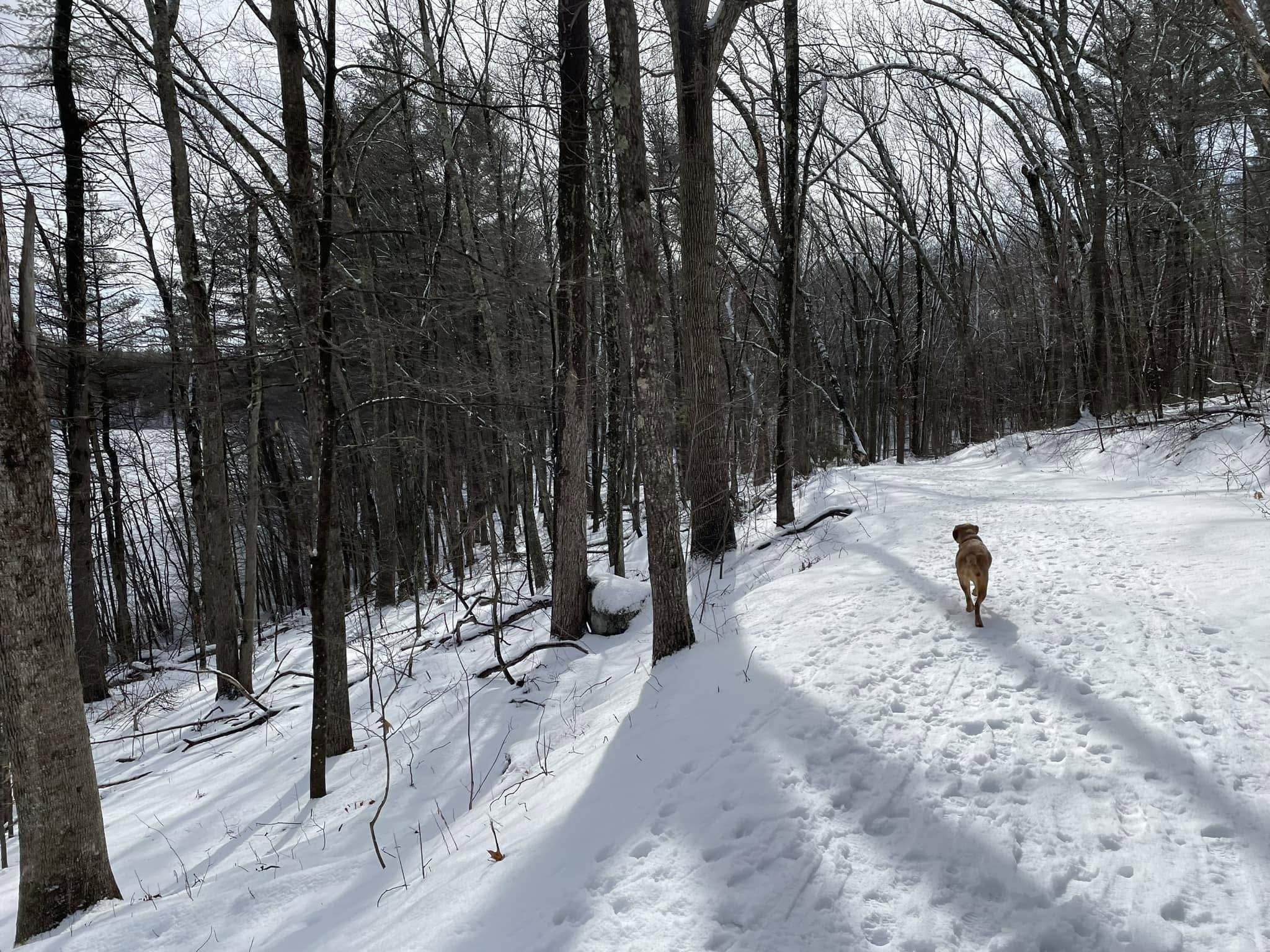
I found my way back to yoga, but my relationship to the practice had changed completely. I wasn't chasing the hardest pose or building unnecessary flexibility anymore — I was practicing for function: bending to load the dishwasher, walking my dog without pain, driving comfortably. Looking back, I was rebuilding my own mobility, balance, power, and coordination — four of what would become the Ease in Motion components of active longevity.
Healing the Nervous System
Not long after, a Crohn's Disease diagnosis taught me the importance of nervous system regulation. Teaching special education through the pandemic, on top of ongoing movement restrictions post-surgery, pushed my system into overdrive. I found real relief through consistent, simple practices — meditation, breath work, and Yoga Nidra.
Discovering the Cognitive Health Connection
A few years later, watching several family members lose cognitive function to Alzheimer's sparked my interest in cognitive health. Research led me to movement's protective effects against cognitive decline, and I became determined to build that protection into my own life and in the lives of others.
Becoming a Yoga Therapist
Then I found yoga therapy. I'd been teaching yoga, but I wanted to do a better job directly helping the people in front of me rather than just teaching poses. An 800-hour, 18-month program changed that — I learned to treat persistent pain through movement mechanics and nervous system regulation, and I developed the skill of really seeing how each person moves in terms of what serves them, and what doesn't. My private clients started getting out of pain, and my classes shifted from pre-set sequences to something built around the bodies actually in the room.
The Birth of Ease in Motion
I started Ease in Motion in January 2026, renting studio space for a 6-week series called Back-Ease. It became a weekly class — now called Ease. When students asked for more strength, stability, and balance work, I added a second class — now called Rise. I soon noticed most of my students and private clients were in their 60s, 70s, and 80s (with a few in their 50’s and 90’s!), and I started delving into what abilities we naturally lose with age, what can be preserved or improved, and what actually works. I earned my Functional Aging Specialist Certification through the Functional Aging Institute. As I fused functional fitness with yoga, the Ease in Motion Model — and its six components of active longevity — was born.
A Full-Time Commitment
I'd been straddling the yoga and K-12 education worlds for a while. In June 2026, I left education to devote myself fully to helping aging adults live their best lives. Everything I'd faced over the previous several years, combined with the passion that fueled my education career, carries into this next chapter: using research-based practices so my clients and students can do what they want, when they want, for as long as possible.
I love what I do, and I'm always learning — and I can't wait to help you live your best life too!
Ready to Begin?
Register for a group class or private session, or use the form to reach out with any questions.